Advanced Technology of snowboards design.

2026-2027 GRAY SNOWBOARDS.

The “FREESTYLE CATEGORY” is a development concept that embodies our philosophy:

starting from the fundamental turning performance that forms the basis of snowboarding,

we incorporate elements of various riding styles to achieve the optimal riding feel for each category.

GRAY applies its accumulated carving expertise and development capabilities to FREESTYLE CATEGORY board design.

While riding styles and preferences in snowboarding vary,

all techniques ultimately originated from speed and high-quality turns.

Development riders across each category continuously envision next-level board improvements.

Through brainstorming sessions and innovative concepts, these ideas are methodically brought to life throughout the year.

In the “CARVING CATEGORY,”

we have further refined our innovative metal-and-fiberglass combination construction together with the core profile.

For the 26‒27 season, we have expanded the use of 3D molding to even more models.

Not only the shape molds but also the press molds are designed in 3D,

enabling us to pursue a more three-dimensional and sophisticated form.

GRAY SNOWBOARDS 2026-2027 LINE UP。

You are welcome to test them out at a nearby DEMO event.


Gray Snowboards

GRAY SNOWBOARDS, founded in 1999 with inspiration from surfing and skateboarding, crafts boards that deliver exhilarating, solid turns. Its unique R&D capability has established GRAY as a renowned high-performance snowboard brand. Every element—from outline shapes to camber architecture—evolves through proprietary research and design theories. The 3D molding technology we’ve been researching for several years captures the shape of a snowboard in three dimensions, enabling a more sculpted structure and form. The boards showcase functional beauty through precisely calculated 3D curves and carefully selected materials. Moreover, every core profile—referring to the thickness balance of the wood core down to 1/100 mm—is designed entirely in-house with our own specifications. GRAY's technology stems from sharp insights, each rigorously tested on snow. Our production spans from high-quality Japanese manufacturing to mature development collaboration with Taiwanese facilities.

Engineered with GRY progressive inspirations

Gray Lab Products with the concept of “Engineered with Gray progressive inspiration are snowboards designed innovative inspiration.

FREESTYLE CATEGORY ENGINEERING&TECHNOLOGY

CONSTRUCTION

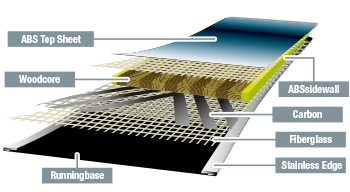
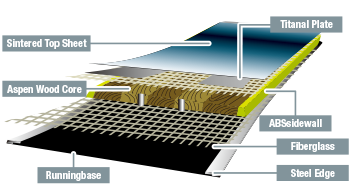
All of 2026-2027 models of GRAY SNOWBOARDS has the construction of Sandwiched wood core.
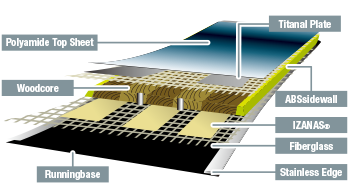
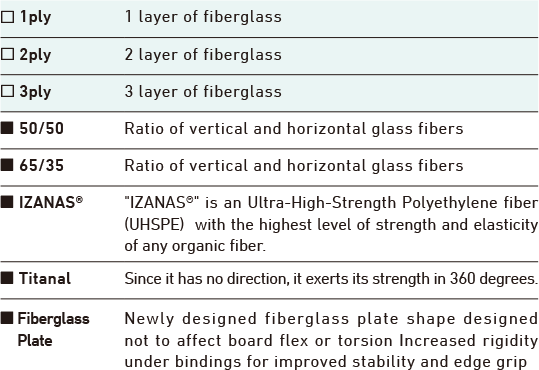
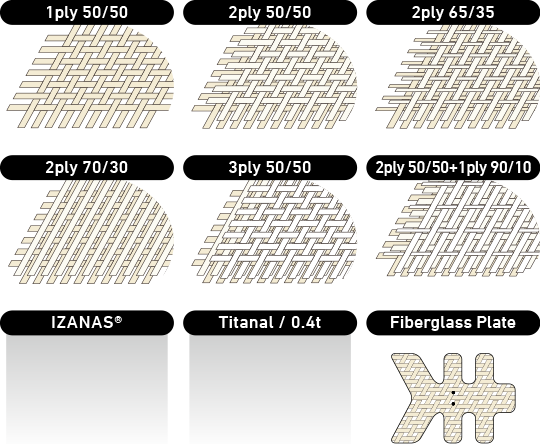
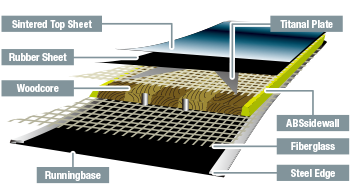
Our original designs select appropriate woods to combine for wood core and give optimal flexibility and lightness for each model. As the reinforcing materials, not only fiber glass but all new materials “IZANAS®” is used together with Titanal metal and carbon fiber. The combination gives flexibleness and more stiffness in good balance.

CONSTRUCTION

REINFORCEMENT/FIBERGLASS&METAL

REINFORCEMENT

FIBERGRASS&METAL

CORE CONSTRUCTION

Core construction: Structure and combination

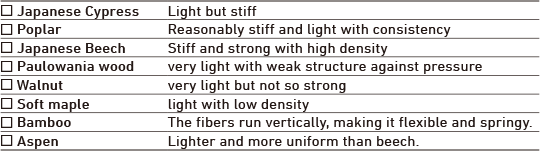
Different types of wood have different characters.Meantime, different characteristics are required by sections of snowboard.To make high spec snowboards, it is required to reconcile 2 opposing elements i.e. intensity and lightness in high level.We carefully select best matching materials for each section.A strong wood with high density is used for the section requiring stiffness and a right weight wood is used for the section required lightness.It is one of key unique technology of Gray which is called as “100% wooden complex core” to achieve light and strong.

コアコンストラクション

Ultra Light Core

Light Maple is used for insert holes section and edge section while main body is made of Walnut. The core is designed for Epic. Combination of the core construction and fiberglass plate realizes high repulsive force even light weight.

STD Core Ⅱ

Japanese Cypress is widely used along with both side edges while main body is made of Paulowania wood. This core construction is effective to realize light weight but has disadvantage in strength. The disadvantage is covered by fiber glass layers. Combination of siding Pauowania wood and fiber glass gives sufficient repulsiveness and tenaciousness to the snowboard even in the lightest weight.

Light Core

Combination of Paulownia and light Poplar makes light & strong wood core.

Radial Sidecut

Soft maple is used for center and both edges sections while Walnut is a base.

Radial Sidecut

Poplar is only material for the core construction. Lightness and strength are well balanced.Giving Quadrax glass on the core profile provides sufficient repulsiveness and tenaciousness to the snowboard in light weight.

Radial Sidecut

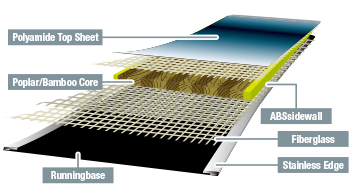
The core is constructed from a combination of lightweight poplar and bamboo. Its spring-like elasticity creates a unique board bounce.

SIDE CUT

TripleRadius Sidecut

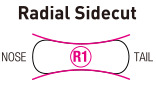
A large single arc is used for side cut. The side cut works effectively for any riding style.It supports natural and smooth curving in any situation.

MultiRadius Sidecut

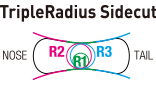
3 of arcs combination is used for side cut. In Gray’s production, a small radius arc is set underfoot and 2 larger radius arcs are given both nose and tail ends.It shows quick response at beginning of turning or jib trick, and provides stable edge grip during high speed riding. Release of edge at end of turning or takeoff from kicker can be done smoothly.

MultiRadius Sidecut

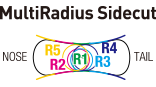
Multi-radius side cut consists of 5 arcs.The smallest arc is at the center of snowboard and large arcs are on each side, the largest arcs are at board end. It is special side cut.

SHAPE

Gray snowboards can be categorized in 3 groups
by shape of nose & tail and its length.

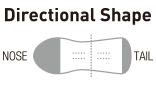
Directional Shape

Directional shape has clear traveling direction. Slightly long nose can be responsive to any snow conditions. Tail length is relatively shorter so as not to sacrifice switch riding.
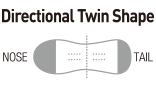
Directional Twin Shape

An intermediate shape between Directional shape and Twin shape.Slightly longer nose than tail can enhance ride-ability on powder snow and bad snow condition without sacrificing spinning and switch riding.It can be said the most multi-purpose shape.

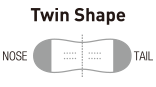
Twin Shape

Same shape and same length are given to both nose and tail. No difference is aware between traveling direction and switch riding.

ARCHES GEOMETRY

SINGLE
CAMBER
SINGLE CAMBER

Camber-tech for purely focusing on free-ride.Board center has a tight arc while both ends are with slight arc.This makes more repulsive force when snow-contact-points come closer to the board center with pliancy of the board.

ACTIVE
CAMBER
ACTIVE CAMBER

Compared to ordinal Camber, the camber angle to snow-contact-points are slightly flat.This makes snow-contact-points come closer to board center more when weighted, and provides better rotational performance with less pressure at both ends. This is a next generation arc which gives fancy footwork while reasonable camber feeling is reserved underfoot.

VARIO
CAMBER
VARIO CAMBER

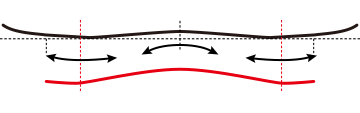
Evolutional arc which enables variable effective edge-length by pressure intensity and edging angulation.Snow-contact-points are set closer to board center and gives better handle-ability in low speed riding. The effective edge-length becoming longer in high speed riding gives stability and high gripping in high speed turning.

HYBRID
CAMBER
HYBRID CAMBER & ROCKER

The outside of the board under each foot has a gentle rocker shape, while the space between the feet has a camber, creating a "hybrid arch." The rocker section allows for loose board handling, making it extremely easy to handle in jibbing sections and freestyle tricks. At the same time, the camber between the stances allows for sharp carving with firm edging when the board is angled. It truly combines the best of rocker and camber.

POWDER
ROCKER
POWDER ROCKER

Rocker arc in overall shape and the apex of arc is located slight closer to tail end.The magic arc enables that nose end of the board is easily lifted when rider weights on his or her bag leg.Not tight arc between snow-contact-points also enables stable riding even on grooming slope.

CORE PROFILE

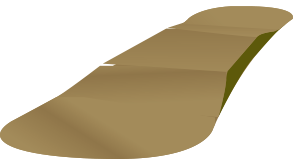
Core profile means thickness of board from nose top to tail end (balance).
3 different types of core profile deliver respective riding feels.

COREPROFILE
Positive

Thickness of core underfoot is convex. Either end of underfoot is thinner.Rider can feel solidness with the sole of the foot given by thickness of core and can make stabilized turn even at high speed range.

Even

Core between both feet is slightly thinner. It is an intermediate profile between Positive Profile and Negative Profile. Slightly thinner core can make torsion effect which enhances response and realize easy handling as well.

Negative

Core between both feet is significantly thinner. It gives strong torsion effect and the snowboard bows around center of the board. As the result, rider can feel quick response.Rider also can make angulation edging angles differently at front foot and at back foot.The subtle riding technique is very effective for technical riding.

FLEX

Twin Flex

Symmetric flex pattern. Center stance is a basic.
Directional Flex

Stiffer flex is given tail-end side. Set-back stance can be supported by stiff tail.

STIFFNESS

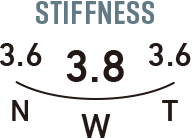
Flex of snowboard is indicated on a scale of 1 to 10. (10 means the most)N-W-T means Nose, Waist and Tale.If scale of Nose and Tail, the snowboard is called Twin Flex.If not, it is considered as Directional Flex.

STIFFNESS

CONVEX BASE

STIFFNESS

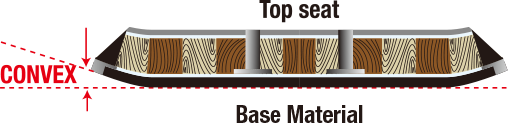
It is important that sole of snowboard should be flat or convex.If it is concave, the snowboard is hard to turn and tough to control.Gray finishes the sole of all our snowboards including Alpine boards with convex shape.Degree of convex is controlled precisely specialized to each model.

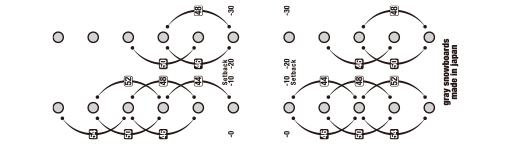
STANCE WIDTH & SETBACK

STANCE WIDTH & SETBACK

All of Gray snowboards have 2 X 4 cm of insert holes to give flexible stance and set back.No special recommendation for stance and set back is given by Gray because rider’s height and preference are varied.We also want riders to make own set back with their preferences.Riding feel changes with set-back. Even the same snowboard, riding feed is totally changed by set-back stance and by center. Gray designs thickness of core to deliver 100% of performance of the snowboard in any binding settings and verifies on the snow test.


CARVING CATEGORY ENGINEERING&TECHNOLOGY

The 26-27 Carving Category features a highly refined and matured lineup.

The SONICALMACH LT, developed using technology derived from the MACH series,
is an intermediate-level run & trick model built with a 3D mold.

This season, the long-awaited ver.C, equipped with carbon beneath the core, joins the SONICALMACH LT family.

The Type-X, a pure competition model derived from the Type-R, is now offered in ver.S, which features a sintered top sheet.

For the Type-R V, VI, and VII longboard series, new EW (extra-wide) versions have been added.

The DESPE WOOD series now features a newly designed Active Camber across all lengths,
with the highly anticipated wide models introduced for the 58 and 62 sizes.

CONSTRUCTION

SONICALMACH [46, 51, 54, 55w]

■ X-shaped carbon roving placed beneath the core
■ ABS Top Sheet
■ Stainless steel edges
MACH

SONICALMACH
[54ver.C, 55w ver.C, 58, 60w, 63w]

■ X-shaped carbon roving placed beneath the core
■ Polyamide Top Sheet
■ Stainless steel edges

SONICALMACH LT
[46, 51, 52w, 54, 55w, 56ew, 60w, 61ew]

■ Hybrid core of bamboo and lightweight poplar
■ Polyamide Top Sheet
■ Stainless steel edges

SONICALMACH LT ver.C
[54ver.C, 55w ver.C, 56ew ver.C]

■ Carbon strips loaded beneath the core
■ Hybrid core of bamboo and lightweight poplar
■ Polyamide Top Sheet
■ Stainless steel edges

DSPRD Ti Type-X ver.S

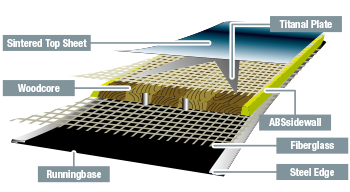
■ 0.4 mm titanal in an X-shape inserted beneath the Top Sheet
■ Sintered Top Sheet
■ Steel edges with a hardness rating of 48

DSPRD Ti Type-X ver.P

■ 0.4 mm titanal in an X-shape inserted beneath the Top Sheet
■ Polyamide Top Sheet
■ Steel edges with a hardness rating of 48

DSPRD Ti Type-R

■ 0.4 mm titanal in an X-shape inserted beneath the Top Sheet
■ Sintered Top Sheet
■ Steel edges with a hardness rating of 48

DSPRD Ti [iz]

■ Ultra-High-Strength Polyethylene fiber “IZANAS” loaded beneath the core
■ Polyamide Top Sheet
■ Stainless steel edges

DSPRD [micro/mini]

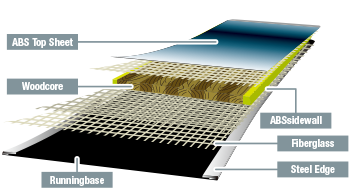
■ Full fiberglass sandwich construction
■ 0.5 mm ABS Top Sheet
■ Stainless steel edges

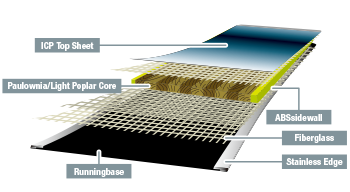
DESPE WOOD

■ Full fiberglass sandwich construction
■ 100% lightweight poplar core (32,38,43)
■ Paulownia-lightweight poplar composite core (except 32,38,43)
■ 0.5 mm ICP Top Sheet
■ Stainless steel edges

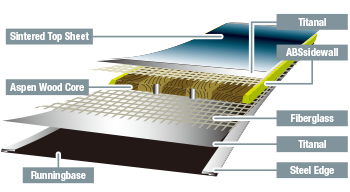
QUADRA II / QUADRA [63, 85]

■ Full metal sandwich construction with 0.4 mm titanal on top and bottom
■ Sintered Top Sheet
■ Steel edges with a hardness rating of 48

QUADRA [57, 72]

■ 0.4 mm titanal in an X-shape inserted beneath the Top Sheet
■ Sintered Top Sheet
■ Steel edges with a hardness rating of 48

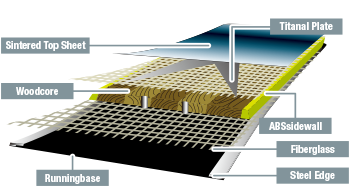
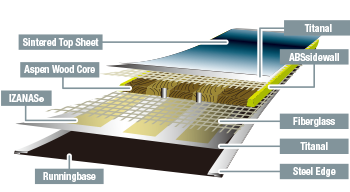
TYCOON Type-S [iz]

■ Full metal sandwich construction with 0.4 mm titanal on top and bottom
■ Ultra-High-Strength Polyethylene fiber “IZANAS” loaded beneath the core
■ Sintered Top Sheet
■ Steel edges with a hardness rating of 48

TYCOON

■ 0.4 mm titanal ribbon sheet inserted beneath the top sheet along the upper edge
■ Sintered Top Sheet
■ Steel edges with a hardness rating of 48

FORCE

■ Full fiberglass sandwich construction
■ 0.5 mm ABS Top Sheet
■ Steel edges with a hardness rating of 48


PAGE TOP